
Summer produce brings stand-out value as seasonal supply builds
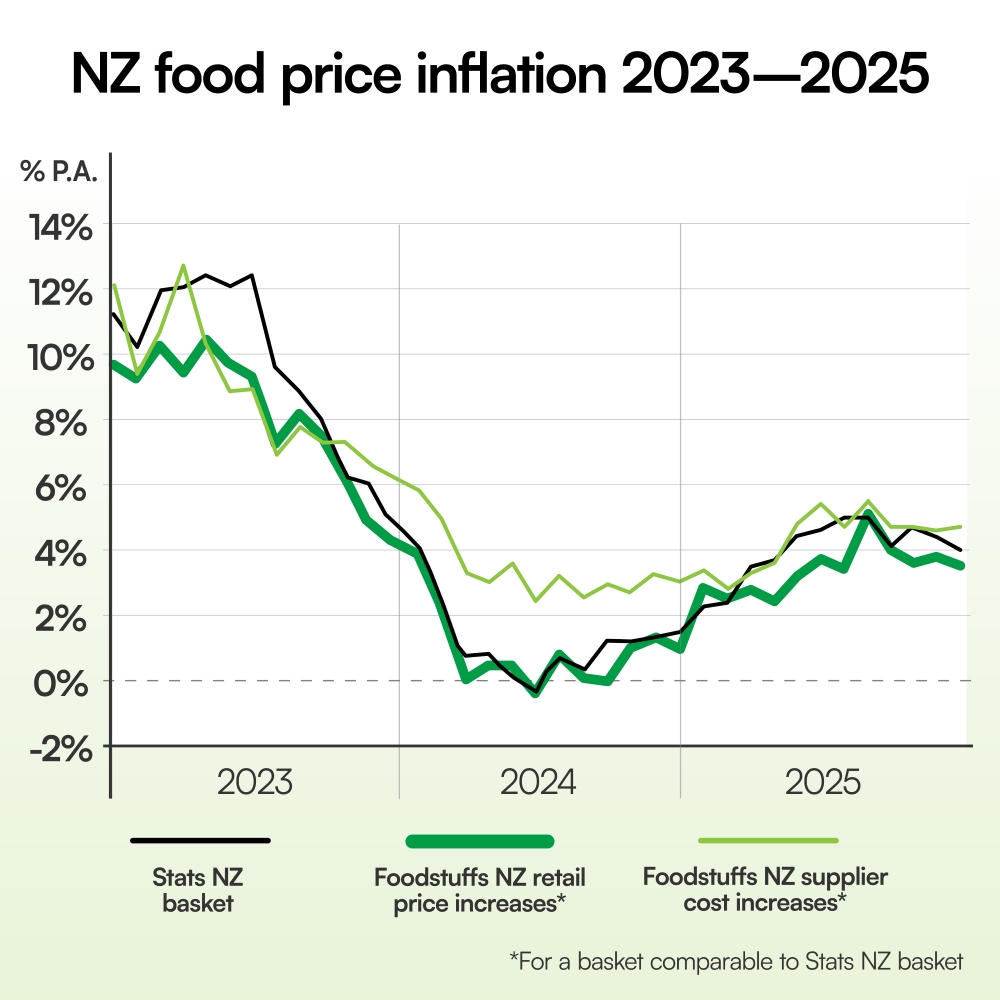
• Stats NZ records 4.0% annual food price inflation (FPI) in December
• Foodstuffs sees retail prices rise 3.5% YOY for their comparable FPI basket of products
• Strong seasonal supply drives value in salad ingredients, with cucumbers and lettuce leading YOY falls
• Red meat and dairy remain top contributors to price increases, as strong global demand continues
The Foodstuffs grocery co-ops say summer is delivering great value right now, with seasonal fruits and salad ingredients in strong supply.
Stats NZ reported an annual food price inflation (FPI) rate of 4.0% for December, while Foodstuffs recorded an average year-on-year retail price increase of 3.5% across its comparable FPI basket.
Some of the biggest year-on-year price drops in December included cucumbers (down 37.0%), lettuce (-19.4%), cauliflower (-19.3%), courgettes (-18.7%), broccoli (-17.5%) and kumara (-14.9%).
Foodstuffs NZ Managing Director Chris Quin says there’s stand-out value to be found in the produce aisle.
“The summer months are prime time for salads, and in December lettuce and cucumbers were in strong supply.
“Stone fruits are also coming through well and we love supporting our Hawke’s Bay growers, as many are still recovering from Cyclone Gabrielle.
“Further south, Central Otago’s been growing a great supply of cherries, which are popular given the short 6-week season,” says Quin.
On the other end of the scale, one of the steepest year-on-year price increases in December was kiwifruit, up 66.8%, reflecting the domestic season finishing early and a switch to imported supply.
Tomatoes were up 33.2% year-on-year, reflecting a tighter market caused by lower planting and strong export demand.
Foodstuffs’ retail price increases were outpaced by supplier costs, up an average 4.7% year on year for products in the co-ops’ FPI basket. The Infometrics Grocery Supplier Cost Index (GSCI), which tracks more than 60,000 goods stocked across the co-ops’ 500+ stores, was up 2.4% pa – in line with the rise seen in November.
Quin says red meat supply is steady overall, but strong global demand across all cuts is keeping pricing elevated.
Products seeing some of the biggest year-on-year increases included beef steak (up 25.4%), meat pies (+25.0%), beef mince (+18.8%), blade steak (+18.6%) and lamb chops (+18.3%).
“Customers may have seen some sharp prices on a few key red meat lines, with the best value coming through promoted cuts. Locally farmed chicken and pork remain more affordable options.”
Quin says with improving global milk supply, he expects dairy prices to start trending down.
“We know New Zealanders talked a lot about the price of butter in 2025. For more than two and a half years, many of our stores have been selling our Pams butter at a loss, to make it as affordable and accessible as possible for customers,” he says.
“However, there are still a number of factors that influence the price customers see on shelf – from local production capacity and seasonal demand, through to currency movements, storage and transport costs.
"Additional pressure has been placed on the supply chain with shorter working weeks over Christmas, peak trading volumes, and challenges getting freight across the Cook Strait."
Looking ahead, with the summer harvest continuing into February, customers can expect plenty of locally grown produce to choose from.
“Everyone loves the range of fruit and veges this time of year, and in some ways the best is yet to come, with sweetcorn and watermelon now in great supply and new-season apples starting to come through,” says Quin.
“There’s also a lot of nectarines, apricots, plums and peaches from Central Otago due to be harvested, meaning plenty of delicious options and good value for customers.”