
Foodstuffs basket continues to track well below CPI and food price inflation
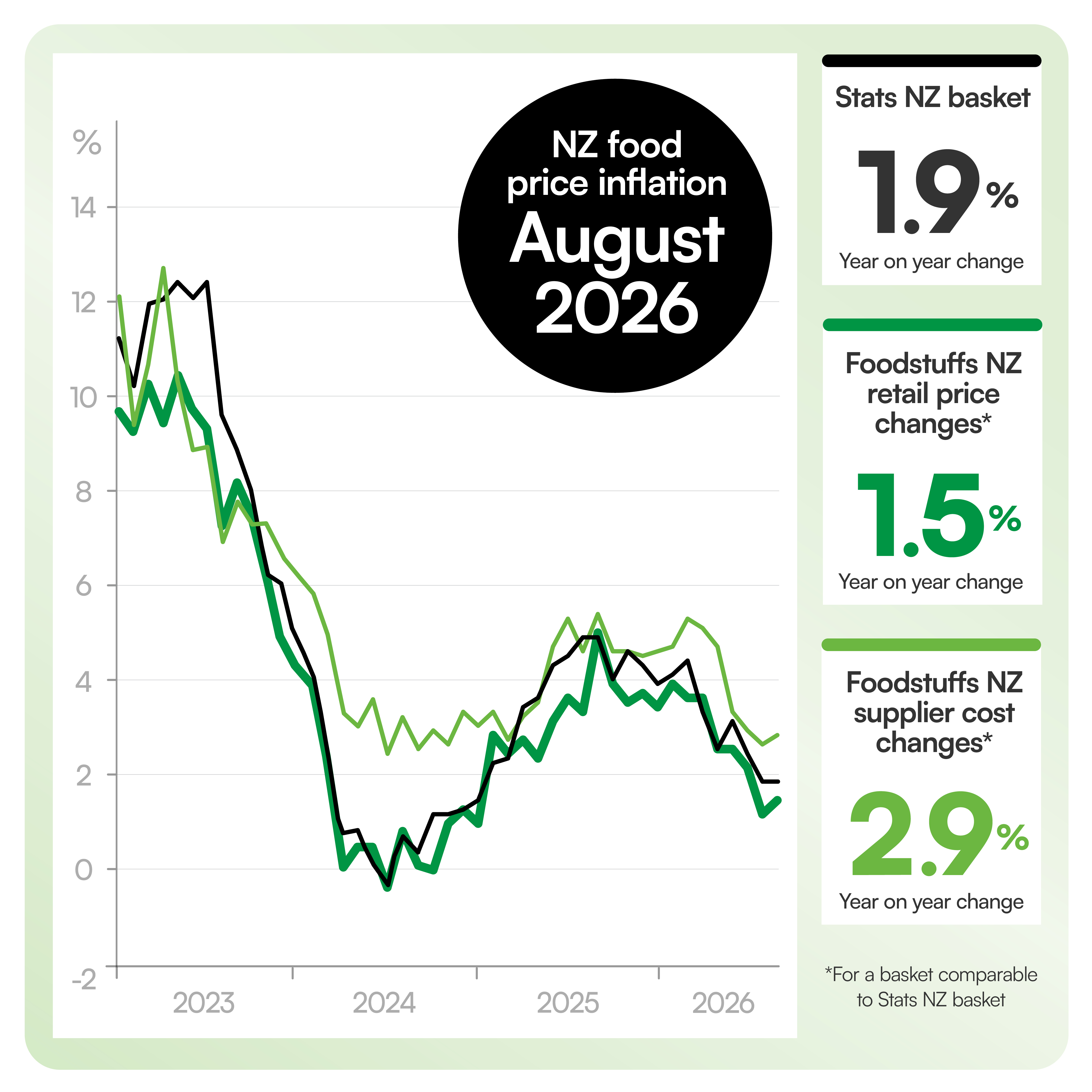
- Foodstuffs co-ops’ FPI basket remains below Stats NZ’s food price inflation with 1.5% YoY rise for August
- Value in lettuce, cabbage, broccoli, eggs and pork – all cheaper than last year
Honey price driven higher by weather impacts and drop in domestic supply
Foodstuffs data shows annual food price inflation across the comparable basket for the co-ops behind New World, PAK’nSAVE and Four Square was 1.5% in August, below Stats NZ’s annual food price inflation rate of 1.9%.
With broader Consumer Price Inflation of above 4% in the latest CPI, Foodstuffs NZ Managing Director Chris Quin says the August grocery numbers continue a positive recent trend of low annual monthly increases – despite increased fuel costs and supply chain pressures this year as a result of the Middle East conflict.
“This data is showing real value in what has been a challenging environment to keep costs in check and deliver value for New Zealanders. When you look at our basket there’s a good mix of fresh produce and everyday grocery items that are cheaper than this time last year.
“Customers are seeing some good value in popular staples including lettuce, cabbage, broccoli, eggs, olive oil, pork and chicken,” says Quin. “At the same time, prices for individual products are still shaped by growing conditions, supply and demand here and overseas.”
One product where prices were moving in the opposite direction was honey, up 25.4% year-on-year in August – the largest individual contributor to the 1.5% overall increase in the Foodstuffs FPI basket.
Quin says honey is a good example of how food prices are largely shaped by supply costs and market dynamics – including international pricing – well before a product reaches the supermarket shelf.
“It’s been a really difficult season for our honey suppliers with unfavourable weather reducing yields this year, compounded by a recent drop in hive numbers while demand for New Zealand honey remains strong overseas,” says Quin. “That combination has tightened domestic supply, and that’s flowing through to prices here in New Zealand for this much-loved spread.”
Some of the biggest year-on-year price increases in August included onions (up 55.8%), green kiwifruit (+52.4%), dried apricots (+43.1%), kumara (+27.5%), potatoes (+27.4%), and honey (+25.4%).
As with recent months, some of the larger produce movements reflect seasonal supply and where prices sat a year ago. Potatoes and onions in particular are coming off unusually low levels last year, with tighter supply contributing to higher prices this season.
Products tracking lower included lettuce (down 32.1%), cabbage (-31.6%), broccoli (-28.8%), tomatoes (-24.1%), free-range eggs (-22.3%), standard eggs (-14.2%), pork leg (-12.8%), butter (-12.2%), cauliflower (-11.7%), olive oil (-11.5%) and chicken drumsticks (-5.9%).
Produce supply has been steady through recent weeks, with the transition into spring bringing more seasonal options into stores.
“Broccoli and cauliflower are particularly good buying at the moment, and fresh asparagus is now in store ahead of the main season,” says Quin. “Lettuce remains well priced, and we’re starting to see better availability of crops like cucumbers and tomatoes.”
Fuel and international freight remain areas the co-ops are managing closely, with congestion and adverse weather continuing to affect some shipping routes, and fuel costs also remain volatile.
Quin says the co-operative model allows locally owned stores to share buying, logistics and infrastructure, giving them the scale to manage cost and supply pressures while staying focused on value for customers in their communities.
Supplier costs for products in the co-ops’ comparable FPI basket rose an average of 2.9% year-on-year, while the wider Infometrics Grocery Supplier Cost Index (GSCI), which tracks more than 60,000 goods stocked across Foodstuffs’ 500+ stores, rose 1.9% pa in August.