
Foodstuffs co-ops working with suppliers to mitigate cost impacts where possible
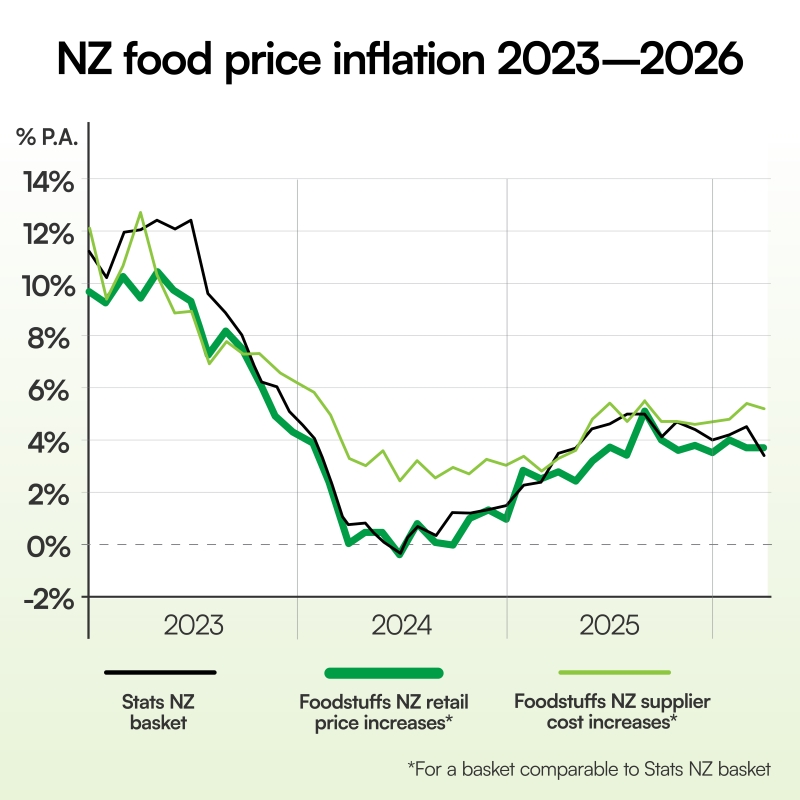
• Stats NZ records 3.4% annual food price inflation (FPI) in March
• The Foodstuffs co-ops saw retail price rises of 3.7% year-on-year for their comparable FPI basket of products, the same rate as in February
• Global fuel and related cost increases from the Middle East conflict are yet to flow through to NZ grocery prices
• Pressure felt across the food system – growers, manufacturers, logistics, and retailers
• The Foodstuffs co-ops are focused on working with suppliers to agree fair increases and isolate what are temporary costs.
The Foodstuffs co-ops say global fuel and packaging costs are yet to flow through to grocery prices – and they’re working closely with suppliers to help them manage those increases, and also limit the impact on customers at the checkout.
Foodstuffs NZ Managing Director, Chris Quin, says neither the Stats NZ annual food price inflation (FPI) rate of 3.4% released today for March 2026 – or the Foodstuffs co-ops’ 3.7% average year-on-year increase across its comparable FPI basket – reflect the renewed cost pressure up and down the supply chain from the economic shockwaves of the Middle East conflict.
While there are no product shortages, Quin says the significant rise in fuel prices is being felt right across the food system, from farms and factories through to packaging, transport and logistics, to supermarkets.
“We’re seeing the early impacts of higher fuel costs, but some of that pressure will take time to show up on shelf because we’re at the end of global and domestic supply chains,” says Quin.
“We are working closely with suppliers to navigate a tough environment, while trying to protect customers from rising costs as much as we can.”
The two Foodstuffs co-ops are each rolling out a package of practical changes to support their small and medium-sized New Zealand suppliers, including faster payments for small businesses, and quicker turnaround on price change requests that are driven by their increased fuel costs.
“Our focus remains on keeping grocery prices as steady as possible, especially when many households are already under cost-of-living pressure. We’re working alongside suppliers who are seeing genuine cost increases to help them through these temporary challenges.”
Where requests are driven purely by fuel prices, Quin says they will be fast-tracked, with review times halved from normal.
“We are assessing each request on its merits, because it’s really important, we don’t lock in temporary inflation. We see these changes as short term, with fuel-related increases coming down again once global oil and diesel prices ease.”
“This approach applies to suppliers, whether they deliver to stores or distribution centres, and it’s being applied consistently, while continuing to meet our Grocery Supply Code obligations,” says Quin.
The co-ops are also exposed to these cost pressures, says Quin, with large-scale transport operations moving food and groceries to stores throughout the North and South Islands.
“Our aim is to strike a balance between backing suppliers so they can manage the extra costs, while working to deliver value for customers. We do that by buying well, being open about how we make decisions, and absorbing costs where we can,” says Quin.
Foodstuffs FPI basket – March 2026
Meanwhile, last month’s data shows seasonal supply improving value in some parts of the co-ops’ comparable FPI basket, with customers seeing lower prices in a number of fresh produce lines, alongside some easing in everyday proteins.
Some of the biggest year-on-year drops recorded in the co-ops' pricing in March included olive oil (down 21.3%), pears (-19.2%), cauliflower (-16.8%), apples (-14.9%), red kumara (-13.9%), along with chicken drumsticks (-13.6%), and eggs (-12.2%).
At the same time, less sunshine and seasonal change kept more weather-sensitive veges under pressure. Some of the steepest year-on-year price increases last month were courgettes (up 59.2%), lettuce (+38.1%) and green beans (+34.1%). Looking ahead, pumpkins, potatoes and new season kumara offer better value.
Global red meat prices remain elevated, driven by strong demand and tight supply. In March, the co-ops saw year-on-year increases for lamb roasts (up 29.6%), beef blade steak, (+27.1%), meat pies (+20%) and sirloin steak (+17.8%). Pork roasts and whole chickens continue to provide more affordable protein options.
Last month, Foodstuffs’ retail price rises were outpaced by supplier cost increases, which were up an average 5.2% year on year for products in the co-ops’ FPI basket. The Infometrics Grocery Supplier Cost Index (GSCI), which tracks a much wider group of more than 60,000 goods stocked across the co-ops’ 500+ stores, was 2.1% pa – slightly below February.