
Foodstuffs’ FPI basket prices up only 1.6% – but concerns remain about weak NZD and fuel costs
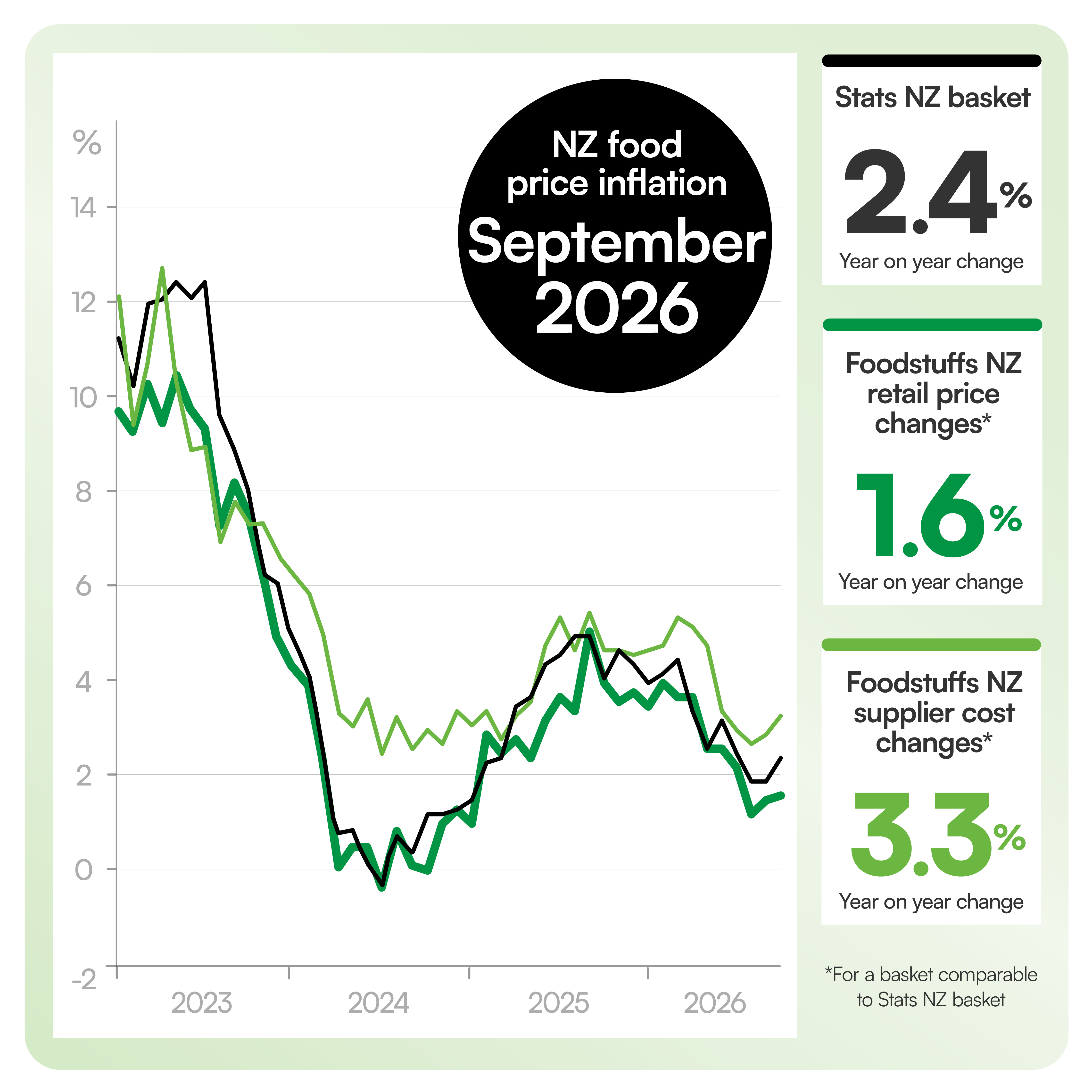
- Foodstuffs co-ops’ comparable FPI basket retail prices up 1.6% YoY in September
- Weaker New Zealand dollar and higher refined fuel prices are increasing costs across imported food and grocery supply chains
- Fresh greens, tomatoes and eggs all cheaper than last year.
Foodstuffs data shows annual food price inflation across the comparable basket for the co-ops behind New World, PAK’nSAVE and Four Square was 1.6% in September, compared with Stats NZ annual food price inflation of 2.4%.
The September result means food price inflation across the Foodstuffs co-operatives remains well below New Zealand's annual inflation rate of 4.1%, despite increasing cost pressures from a weaker New Zealand dollar and sharply higher fuel prices.
Foodstuffs NZ Managing Director Chris Quin says the New Zealand dollar is around 14% lower than five years ago on a trade-weighted basis, increasing the cost of imported groceries and other products.
That exposure is particularly evident in everyday categories that rely heavily on imported ingredients and packaging.
Quin says this has been compounded by a rise of around 90% in the Asian benchmark price for refined diesel since before the Middle East conflict began – with higher costs flowing through farming, fishing, processing, packaging, shipping and domestic distribution.
“This is a tough time for customers and for businesses right across the food supply chain. When costs rise before products even reach the shelf, everyone feels that pressure,” says Quin.
“While a weaker dollar is great for our exporters, strong overseas prices for New Zealand products like dairy and red meat push up prices here at home. Our low currency also makes imported food and ingredients more expensive.
“Higher fuel costs can then hit groceries twice – first through international shipping and logistics, and again as products are moved around New Zealand.”
A flush of cauliflower and broccoli has seen very sharp retail prices reflecting surplus supply. Produce deflation has been a real challenge for local growers, as additional diesel and fertiliser costs mean crops are sometimes sold below the cost of production.
Fruit and vegetable prices are largely driven by supply and demand, which can shift significantly if there is surplus in the market.
Some of the biggest year-on-year price drops in September’s FPI basket included cabbage (down 43.6%), tomatoes (-34.6%), lettuce (-31.9%), cauliflower (-30.6%), broccoli (-23.2%), as well as everyday staples, such as free-range eggs (-21.1%), standard eggs (-13.3%), butter (-12.0%) and olive oil (-11.7%).
Products tracking higher included onions (up 110.5%), dried apricots (+47.2%), potatoes (+30.4%), grapes (+24.5%), avocados (+20.9%), honey (+20.8%) and kumara (+19.4%).
As with recent months, some of the larger price increases reflect unusually low prices this time last year, particularly for potatoes and onions.
The warmer weather is beginning to show through in the range of produce, with asparagus and early-season strawberries now on shelves.
“Asparagus volumes should build and see prices ease, while the outdoor strawberry crop is looking plentiful,” says Quin. “We’re not expecting shortages, and there should be lots of good seasonal options as we move further into spring.”
“Chicken remains a good-value protein, with kebabs and butterflied chicken great BBQ options for our sunnier days and longer evenings,” says Quin.
Supplier costs for products in the co-ops’ comparable FPI basket rose an average 3.3% year-on-year in September, while the wider Infometrics Grocery Supplier Cost Index (GSCI), which tracks more than 60,000 goods stocked across Foodstuffs’ 500+ stores, rose 1.9% pa in September.