
Lowest annual increase in Foodstuffs’ supermarket basket since 2024
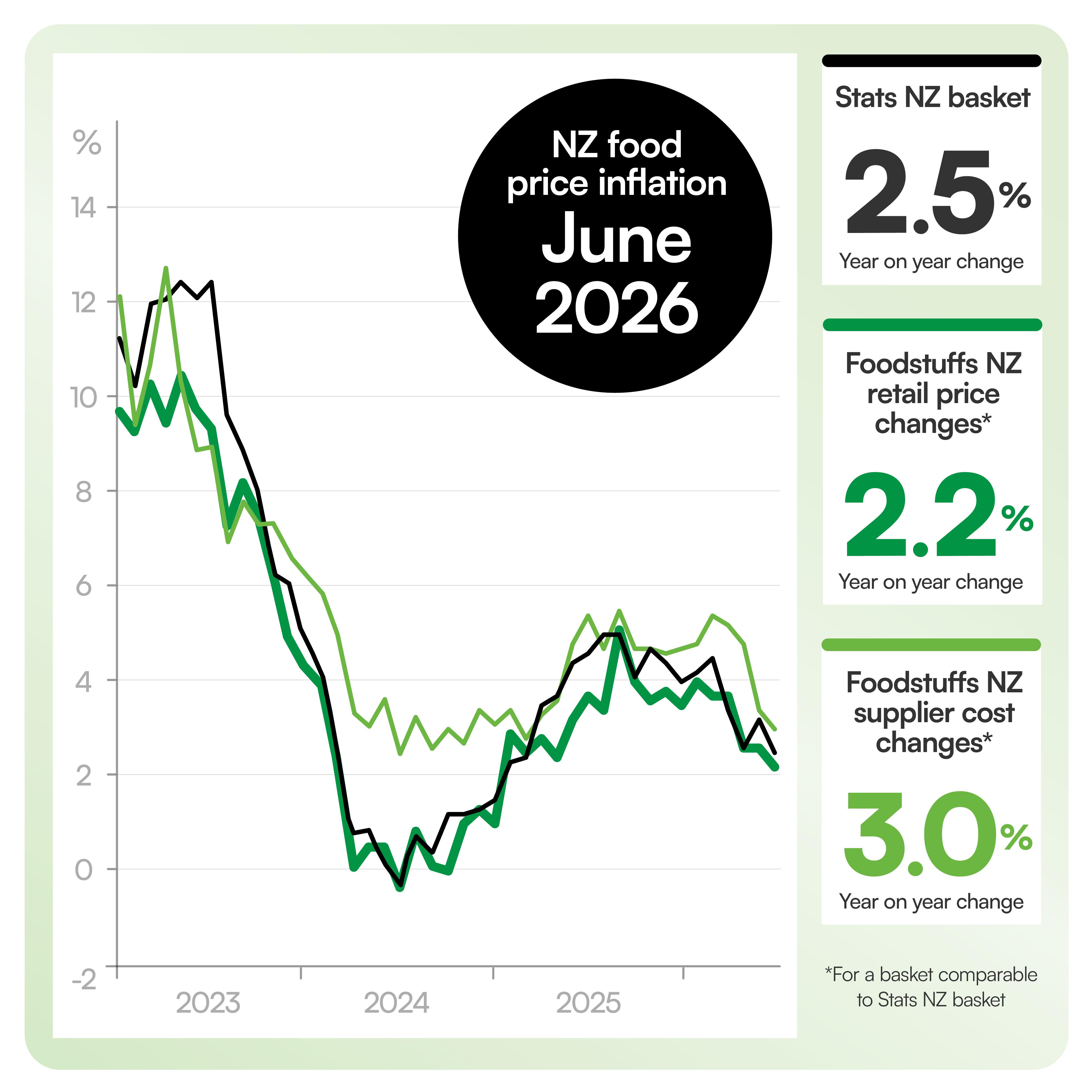
- 2.2% YOY rise in the Foodstuffs co-ops’ FPI basket; Stats NZ 2.5% annual food price inflation (FPI)
- Olive oil, tomatoes, eggs and bean prices drop in June
- Red meat remains elevated, while chicken and pork offer value
Foodstuffs data shows food price inflation eased in June, with the co-ops’ comparable FPI basket up 2.2% year-on-year, the lowest annual increase since December 2024. This comes as Stats NZ reported an annual food price inflation (FPI) rate of 2.5% for June 2026.
Against a backdrop of global uncertainty, Foodstuffs NZ Managing Director Chris Quin says the relatively low increase recorded in June reflects a disciplined focus up and down the supply chain on managing supplier and freight cost pressures, including volatility in fuel costs over the past four months.
“This is an ongoing focus for Foodstuffs’ 500+ local family-owned PAK’nSAVE, New World and Four Square stores, to ensure New Zealand customers continue to have surety of supply, choice and value,” says Quin.
June’s FPI basket numbers show seasonal value in fresh produce along with some imported staples, while red meat prices remain high due to continuing strong international demand.
“Winter produce is giving our customers some great options at the moment, with mandarins, pumpkin, broccoli, cauliflower, cabbage and leeks all good buying,” says Quin. “Chicken and pork are also in good supply, and offer choice in proteins for planning meals on a budget.”
Some of the biggest year-on-year price drops in June were cauliflower (down 22.8%), tomatoes (-22.3%), olive oil (-21.0%), green beans (-20.5%), apples (-17.9%), eggs (-17.5%), and chicken drumsticks (-12.0%).
At the same time, some products continued to track higher, including dried apricots (up 45.1%), white bread (+35.0%), potatoes (+26.8%), brown onions (+20.0%), blade steak (+19.0%), and red kumara (+16.9%).
Quin says dried apricots are a good example of how New Zealand is exposed to international food markets when sourcing some products.
“They’re popular here, so when severe frost in Turkey hits crop yields and tightens global supply, that flows through to prices for our customers”.
Global factors are also continuing to put pressure on New Zealand red meat prices. With more than 90% of New Zealand beef and lamb sold overseas, strong US demand and a favourable exchange rate are making export markets even more attractive for local processors.
Fuel costs have eased from the highs seen earlier in the year but remain elevated and volatile. Quin says a number of freight and supply-chain challenges remain, both overseas and within New Zealand.
“International shipping capacity from parts of Asia remains tight, and typhoon season – typically from June to November – has the potential to cause delays on key routes,” says Quin. “Closer to home, we’re keeping an eye on local disruption to coastal shipping and the recent severe weather in parts of the South Island, as both could affect freight movements in the coming months.”
Foodstuffs’ retail price increases were again below supplier cost increases, which rose an average 3.0% year-on-year for products in the co-ops’ comparable FPI basket. The wider Infometrics Grocery Supplier Cost Index (GSCI), which tracks more than 60,000 goods stocked across Foodstuffs’ 500+ stores, rose 2.1% pa in June.