
New Zealanders should expect ‘gradual and temporary’ pressure, rather than grocery price shock
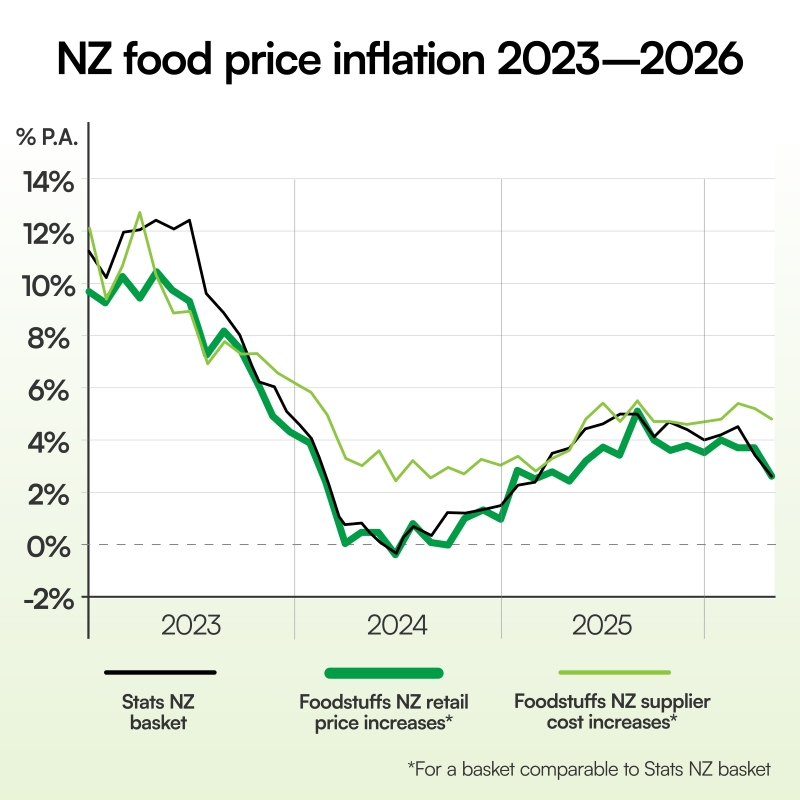
- 2.6% YOY rise in Foodstuffs’ FPI basket; Stats NZ 2.6% annual food price inflation (FPI)
- Elevated oil prices and supply chain costs yet to flow through to NZ food price inflation
- Fuel costs expected to show through in May data, with secondary impacts later in 2026
- Apples, pears, and mandarins offer value, along with winter vegetables.
New Zealanders are yet to see significant flow-through from elevated oil prices and supply chain costs at the checkout, with the Stats NZ annual food price inflation (FPI) rate of 2.6% released today for April 2026 – and the Foodstuffs co-ops’ 2.6% average year-on-year increase across its comparable FPI basket.
Foodstuffs NZ Managing Director, Chris Quin, says he expects to see a gradual and temporary lift in food prices in New Zealand – rather than the ‘grocery-price shock’ being predicted in some other markets.
"It’s important to remember that while fuel and moving stock around accounts for a relatively small percentage of on-shelf prices, there are other affected costs. And, as New Zealand-owned co-ops of family-owned stores, Foodstuffs North Island and Foodstuffs South Island are doing everything we can to continue to deliver value, limit the flow-through to customers, and make sure cost increases are not baked into the supply chain.”
Foodstuffs has been absorbing an increase of more than 90% in the co-ops' diesel costs since the start of the Middle East conflict, with large spikes in price. The impact of higher global oil prices is rippling out, with secondary impacts well beyond fuel, Quin says.
“We’re expecting uneven impacts across the food supply chain, with lags and variability in how costs show up – depending on exposure to diesel, fertiliser and seasonality for growers, and the higher plastics and packaging costs.
“Beyond the supplier fuel-related pricing adjustments approved on a case-by-case basis, we also have a sizeable jump in what it’s costing to run our own transport operations, which deliver food and groceries to our 520+ stores throughout the North and South Islands.”
Quin says the fuel impact will be the most immediate cost increase to be seen at the checkout over the next month, with the potential for higher production, manufacturing, and packaging costs in the second half of 2026.
Contract terms and supplier review cycles – typically quarterly for large suppliers – mean that it can take a considerable time for cost increases to flow through to customers. To provide some relief, Foodstuffs’ co-ops are both applying a fast-track process for their respective suppliers, with reviews of contract pricing carried out separately and decisions reached independently by each co-op.
Quin says the latest Foodstuffs quarterly survey of nearly 2,900 shoppers shows customers are recognising higher fuel prices, shipping, and freight costs, as well as offshore conflict as major factors driving food price increases.
"New Zealanders are really concerned about fuel prices and the effect they’re having on household budgets. We’re seeing how our customers are adapting – planning trips more carefully, cutting out discretionary items, choosing cheaper brands, and doing fewer grocery trips.”
The latest data for the Foodstuffs co-ops’ comparable FPI basket (for April 2026) shows good value continuing in a number of produce lines, with seasonal supply helping ease prices across a range of everyday items.
“There’s some great value in the produce aisle, particularly with the likes of apples and pears,” says Quin. “Mandarins are also coming through in strong supply and they’re a popular lunchbox option at this time of year.”
Some of the biggest year-on-year drops recorded in the co-ops' pricing in April included cucumbers (down 25.6%), olive oil (-21.0%), apples (-14.0%), tomatoes (-12.3%), pears (-11.6%), eggs (-10.9%), and carrots (-10.3%).
At the same time, some items trended higher, with avocado prices rising as the current local season comes to an end. Among the most significant year-on-year price increases last month were avocados (up 40.9%), green beans (+36.6%), courgettes (+30.3%), beef mince (+22.1%) and lamb leg roast (+21.4%).
“As usual, there will be a few seasonal ups and downs in produce prices with recent wet weather creating some planting gaps. But as the weather gets colder, winter favourites like cabbage, cauliflower, leeks, and Brussels sprouts come into their own, while supply drops for items like capsicums and tomatoes,” says Quin.
Last month, Foodstuffs’ retail price increases were outpaced by supplier costs, which were up an average 4.8% year on year for products in the co-ops’ comparable FPI basket.
The Infometrics Grocery Supplier Cost Index (GSCI), which tracks more than 60,000 goods stocked across the co-ops’ 500+ stores, was 2.0% pa – slightly below March.