
Value in winter veges as meat & seafood prices remain elevated
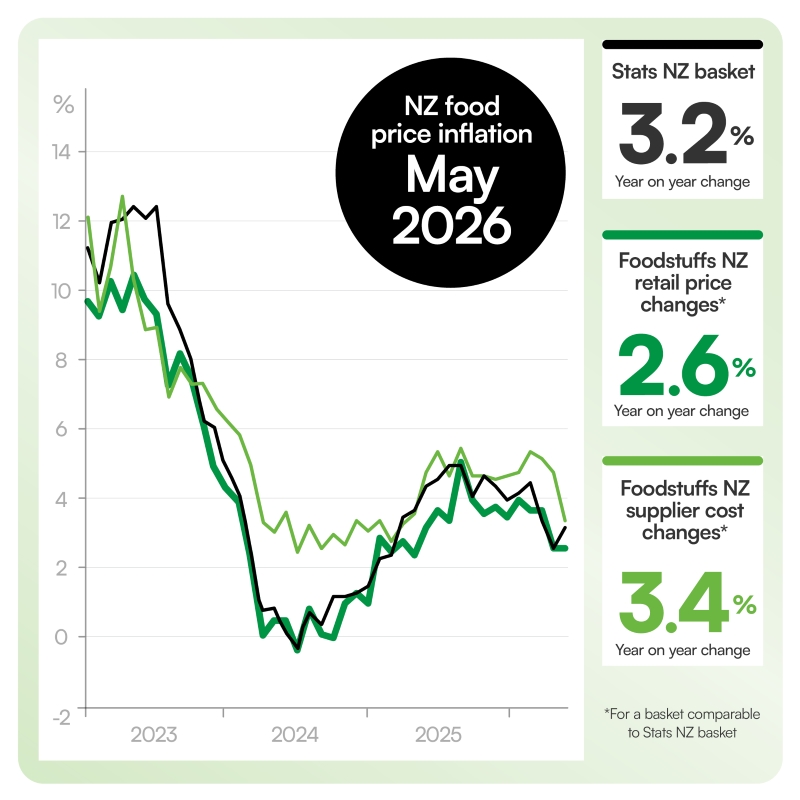
• 2.6% YOY rise in the Foodstuffs co-ops’ FPI basket; Stats NZ 3.2% annual food price inflation (FPI)
• Foodstuffs’ retail prices remain below supplier cost increases of 3.4% YOY
• Tomatoes, cucumbers and apples down YOY in May
• Meat and seafood remain elevated, with winter produce offering value for customers
The Foodstuffs co-ops say its food prices remained relatively steady in May, with fuel-related pressures still being managed closely, and produce helping offset higher protein costs.
Stats NZ reported an annual rate of 3.2% for May 2026, while Foodstuffs recorded an average year-on-year retail price increase of 2.6% across its comparable FPI basket.
Foodstuffs NZ Managing Director Chris Quin says despite the positive signs from the Middle East this week, the flow-on effects from the conflict remain a factor. However, they weren’t the dominant driver of May’s increase.
“We’re still working closely with suppliers, driving efficiencies in our own supply chain, and monitoring fuel, shipping and packaging costs, particularly for imported goods and food packaging,” says Quin. “Some of these cost pressures are taking time to show up on shelf, and we’re processing them carefully to limit the impact on customers wherever we can.”
Quin says May’s numbers reflect a mixed seasonal picture, with fruit and vegetables helping bring the overall Foodstuffs basket down from April, while red meat continues to make the largest contribution to annual price increases.
“As we head into winter, customers can expect value from seasonal favourites like celery, pumpkin and leeks,” says Quin. “Beef, lamb and seafood remain elevated, with good local supply being matched by strong international demand.”
Some of the biggest year-on-year price drops in May were tomatoes (down 31.9%), olive oil (-21.9%), cucumbers (-21.6%), green beans (-18.4%), apples (-5.7%), eggs (-14.3%), pears (-10.1%), carrots (-6.3%) and mandarins (-4.6%).
At the same time, some products continued to track higher, led by white bread (up 37.7%), broccoli (+31.1%), lamb leg roast (+25.9%), courgettes (+20.3%), blade steak (+19.5%), capsicums (+17.3%) and beef mince (+15.5%).
“Produce can shift quickly at this time of year as growing conditions change and supply reduces,” says Quin. “There’s good value in parts of the produce aisle, but looking ahead, covered crops like tomatoes, capsicums, eggplant and cucumbers can tighten as the temperatures drop and days get shorter, putting upward pressure on prices.”
Foodstuffs’ retail price increases were again outpaced by supplier costs, which rose an average 3.4% year-on-year for products in the co-ops’ comparable FPI basket. The wider Infometrics Grocery Supplier Cost Index (GSCI), which tracks more than 60,000 goods stocked across Foodstuffs’ 500+ stores, rose 2.2% pa in May, with Infometrics noting the highest number of products seeing monthly supplier cost increases in a year.
Quin says Foodstuffs’ own brands continue to be attractive options for customers looking for value, helping to stretch household budgets further.
“Customers choose Pams because they expect dependable quality at competitive prices, so it makes sense that local supply is an important part of how we deliver that.”
More than half of Foodstuffs’ own brand product range, Pams, is produced here in New Zealand.
“Where we can source locally at the right quality, scale and value, we do,” says Quin. “Where products can’t be made here or supplied year-round, we source offshore so customers still have affordable options they can count on.”
Quin says local products represent around two-thirds of Pams sales at the checkout.
“Our job is to keep buying well, running efficiently and working with suppliers so customers can find value across the store. That’s what our local owner operators are focused on every day in the communities they serve.”
This week, PAK’nSAVE marked 10 years as New Zealand’s leading brand for fairness in the latest Kantar Corporate Reputation (RepZ) Index, while retaining second place overall for the third year running and being the highest rated supermarket. New World maintained its place in the top 10 overall, ranking seventh.
“The results reflect the efforts of thousands of people working in stores and support centres across the country,” says Quin.
Please note: an earlier version of this release was published with an incorrect Apple stat showing -14.9% when it should have read -5.7%.