
Winter favourites and olive oil cheaper YoY, with Foodstuffs basket up 1.2%
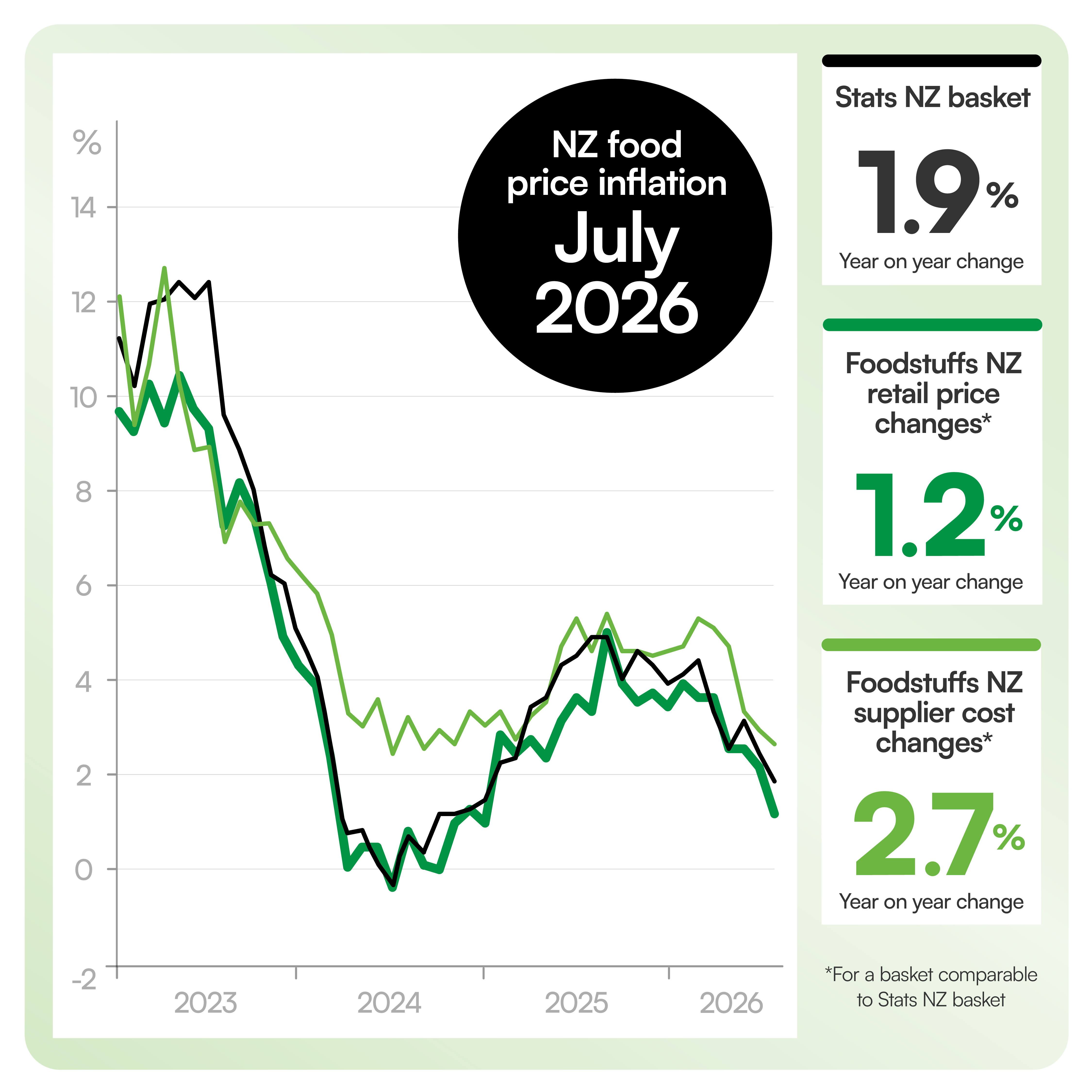
- 1.2% YoY rise in the Foodstuffs co-ops’ FPI basket, the lowest in 20 months
- Winter greens, broccoli and cabbage, along with olive oil, below July 2025
- Beef and lamb still elevated, with chicken offering value.
Foodstuffs data shows annual food price inflation across the co-ops’ comparable FPI basket eased to 1.2% in July, the lowest annual increase since December 2024.
Stats NZ has reported an annual food price inflation (FPI) rate of 1.9% for July 2026, which follows the annual CPI of 4.1% in the June quarter – with fuel and electricity among the major contributors to broader household inflation.
Foodstuffs NZ Managing Director, Chris Quin, says the latest food price data is encouraging at a time when New Zealand households are still facing cost pressures across other parts of their budgets.
“July’s numbers show food price inflation continuing to ease in our comparable basket, with good value across a range of fresh produce and some pantry staples. Broccoli, cabbage, pears, mandarins and olive oil were all cheaper than a year ago,” says Quin.
Some of the biggest year-on-year price drops included tomatoes (down 28.3%), cabbage (-21.8%), lettuce (-17.8%), green beans (-15.9%), pears (-15.4%), eggs (-15.1%), broccoli (-14.9%), olive oil (-13.8%), apples (-8.3%) and mandarins (-8.0%).
Products tracking higher were potatoes (up 44.8%), dried apricots (+41.8%), green kiwifruit (+34.4%), brown onions (+33.4%), white bread (+26.8%) and avocados (+22.8%).
“Produce prices are shaped by supply and demand across the whole market, including demand from overseas and weather impacts,” says Quin. “While potatoes and onions were particularly good buying at this time last year, supply has shortened up and prices have moved back towards longer-term averages.”
Quin says produce supply was generally steady through July, but recent frosts and cold snaps have slowed growth in some lines – with tighter supply of some greens, which can mean a bit more volatility from week to week.
“Early asparagus is starting to arrive ahead of the main New Zealand season, which typically runs from September through to December, and is one of the first signs that spring isn’t too far away,” says Quin.
Meat, poultry and fish remain the main contributors to the annual increase in the Foodstuffs basket, although the rate of price increases eased in July.
Quin says beef and lamb prices are likely to remain elevated for the foreseeable future due to international demand – with chicken offering a better value protein option.
While not a major factor in July’s result, Quin says the co-ops are continuing to manage supply chain challenges including fuel and freight cost volatility, along with port delays and capacity constraints for goods coming from Asia.
“Having scale through the co-op model helps navigate and deal with those pressures. And, while supplier costs remain higher than a year ago, the sourcing and supply chain efficiencies offered by Foodstuffs enable independently-owned local stores to deliver greater choice and value for their customers around the country.”
Supplier costs for products in the co-ops’ comparable FPI basket rose an average 2.7% year-on-year in July.
The wider Infometrics Grocery Supplier Cost Index (GSCI), which tracks more than 60,000 goods stocked across Foodstuffs’ 500+ stores, rose 1.9% pa in July, its slowest annual increase since February 2025.