Climate Change
We recognise climate change is one of the biggest challenges facing New Zealand, our suppliers and our business. That’s why we’ve set science-based emissions reduction targets and are taking practical steps to tackle emissions across our supply chain fleet, distribution centres, support centres and stores.
Why we’re going low carbon
Getting food to communities across the North Island takes a lot of energy, from running stores and distribution centres to moving freight across the country. That means reducing emissions is one of the biggest ways we can lower our environmental impact and help support New Zealand’s transition to a lower carbon future.
We’re focused on practical changes across our business, including our freight fleet, stores, distribution centres and support centres.
To guide this work, we use the Science Based Targets initiative (SBTi), which sets emissions reduction pathways aligned with limiting global warming to 1.5°C. Foodstuffs has committed to reducing FY30 scope 1 and 2 emissions by 42% from our FY20 baseline. An ambitious goal which will require both innovation and collaboration to succeed.
Understanding our carbon footprint
In FY25, we updated our emissions reporting boundary to reflect current co-operative reporting best practice. Emissions from our supply chain fleet, distribution centres and support centres are reported as scope 1 and 2 emissions, while emissions from independently owned stores are reported as scope 3 emissions.
Our emissions inventories are prepared using the Greenhouse Gas Protocol and independently assured each year to support transparency and accuracy.
Foodstuffs North Island emissions profile
Foodstuffs North Island’s emissions inventory covers activities under our operational control, including supply chain operations, distribution centres and support centres.
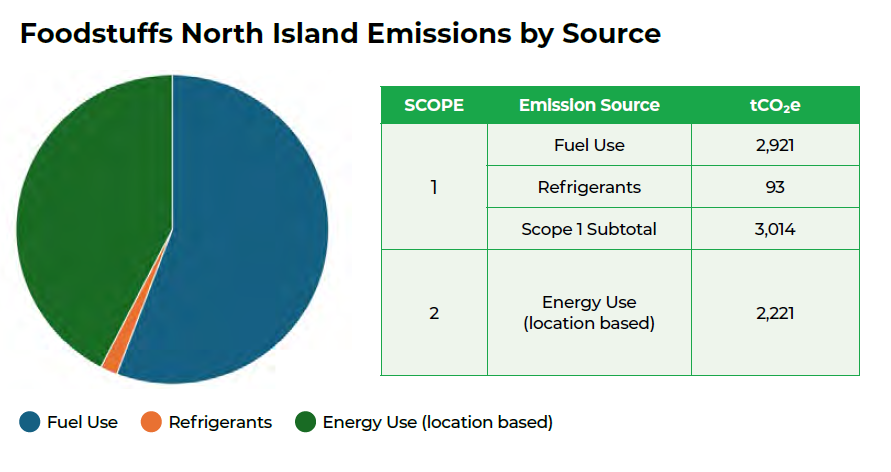
In FY25, our assessed emissions were:
- Scope 1: 3,014 tonnes CO₂e
- Scope 2 (location-based): 2,221 tonnes CO₂e
Together, this represents a 16.5% reduction in scope 1 and 2 emissions compared to our FY20 baseline.
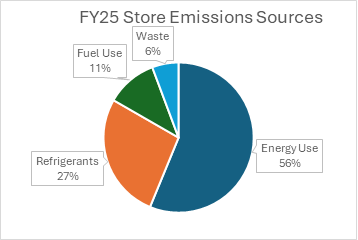
Our stores, reported within scope 3 emissions, also reduced emissions by 26% compared to FY20, largely driven by the transition to lower emission refrigerants.
For further details refer to our FSNZ annual report.
What we’re doing to reduce emissions
Electric transport
Fuel use makes up around 55% of Foodstuffs North Island’s scope 1 and 2 emissions, so reducing transport emissions is a major focus. Alongside route optimisation and efficiency improvements, we’re trialling lower emissions vehicles across our supply chain fleet.
In 2020, a partnership with the Energy Efficiency and Conservation Authority (EECA) helped develop New Zealand’s first electric refrigerated truck. More recently, we added a DeepWay battery electric truck to our fleet, which is expected to avoid around 190 tonnes of CO₂ emissions each year by replacing diesel use.

Charging while you shop
We’re also helping make electric vehicle charging more accessible for customers. Working with ChargeNet and EECA, we’ve:
Installed more than 90 fast EV chargers at stores across New Zealand
Helped customers travel more than one million electric kilometres, avoiding around 2,300 tonnes of CO₂
Refrigeration systems
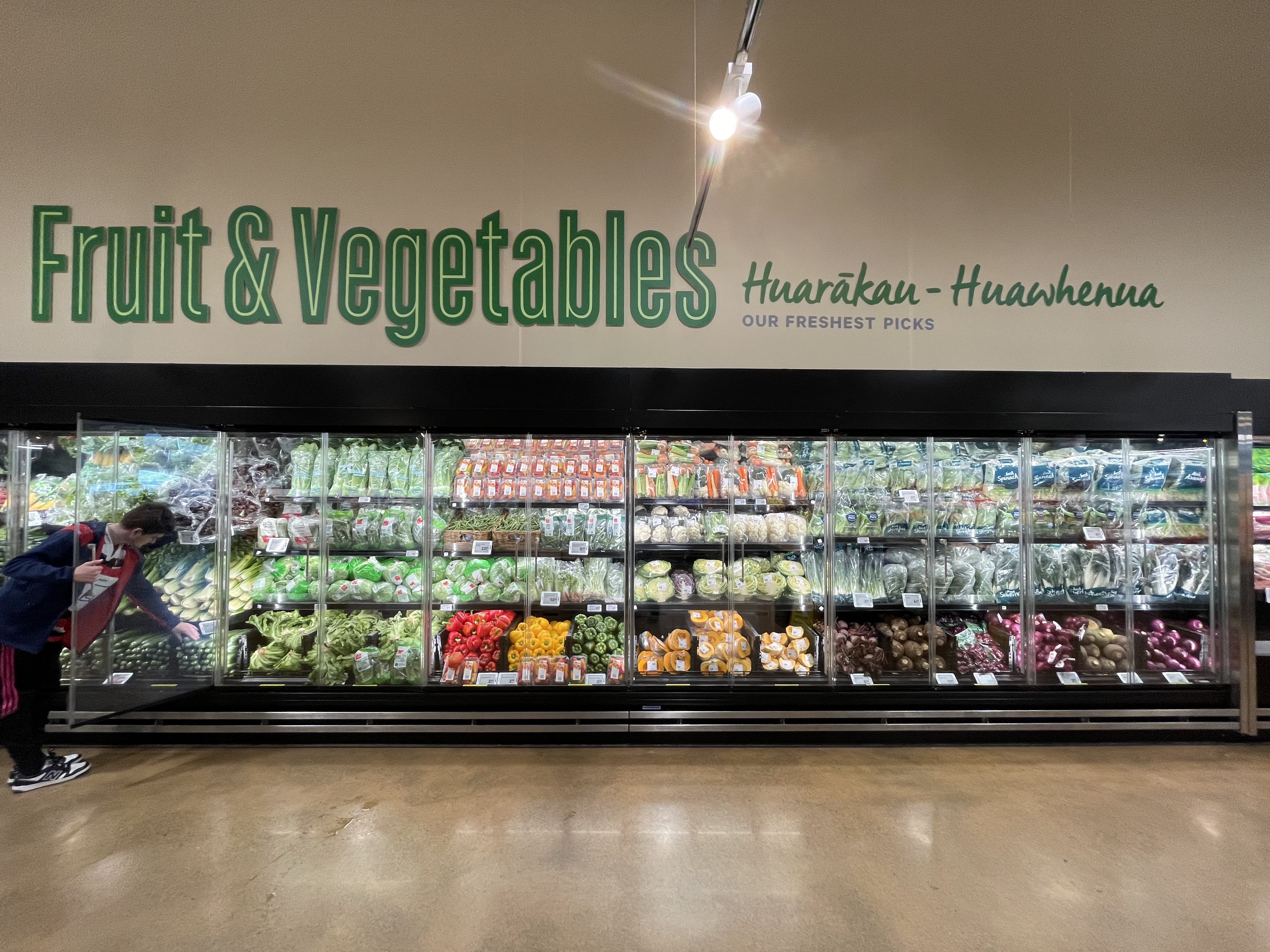
Refrigeration is one of the largest sources of store emissions, largely due to synthetic refrigerant gases. To reduce this impact, we’re transitioning stores to natural CO₂ refrigeration systems.
Foodstuffs was the first retailer in the Southern Hemisphere to trial CO₂ refrigeration back in 2012. Since 2014, all new supermarkets and major refurbishments have used CO₂ systems.
In FY25, seven new CO₂ systems were added, meaning 68% of PAK’nSAVE stores and 36% of New World stores in the North Island now use CO₂-based refrigeration. Combined with fridge and freezer doors, these systems can reduce refrigeration electricity use by around 30%, reducing a store’s overall electricity use by around 10%.
Solar rooftops
We’re investing in onsite renewable energy where it makes sense.
Our Landing Drive Distribution Centre in Māngere, Auckland features a 1.1MW rooftop solar installation, which was the largest array on a single building in New Zealand at the time it was installed.
Our future Pātai Way chilled and frozen distribution centre, planned to open in 2028, will include a 1.96MW solar array to help reduce emissions and strengthen resilience across our supply chain.
Becoming more energy efficient
Energy efficiency is built into all new supermarkets and major refurbishments as part of our minimum 4 Green Star rating requirement. This includes:
- LED lighting throughout stores
- Doors and lids on fridges and freezers
- Skylights and large windows to maximise natural light
- Natural refrigeration systems using lower impact gases
- Heat recovery systems that reuse waste heat to produce hot water in store